Setting up a home gym can change your fitness journey. The right equipment makes any room perfect for strength, cardio, or yoga. Having a dedicated area helps you stay focused and motivated.
Start with a space assessment and choose gear that fits your goals. Quality items like Rogue power racks or JBL speakers add function and comfort. This guide will help you create a space that fits your workout routine.
This post contains affiliate links, which means that if you buy something through these links, at no cost to you, I may receive a small commision from the seller.
A cozy and well-equipped home gym setup. In the foreground, a sleek and modern weight rack with a selection of free weights neatly arranged. In the middle ground, a high-quality treadmill and exercise bike positioned to take advantage of natural lighting from large windows, creating a bright and airy atmosphere. The background features minimalist decor, including a motivational wall print and a potted plant, evoking a sense of balance and mindfulness. The room is illuminated by warm, soft lighting, creating a welcoming and inviting ambiance for a productive workout session. The overall composition is clean, organized, and visually appealing, reflecting the owner’s dedication to fitness and wellness.
Key Takeaways
- A home gym setup costs about $5,000 but saves over $5,000 over ten years compared to gym memberships.
- Proper design ensures equipment like adjustable benches or treadmills match your fitness style.
- Essential items like Lululemon mats and Rogue racks form the core of effective workouts.
- Separatinging the gym space improves focus and privacy for consistent training.
- Investing in durable fitness gear like JBL speakers or quality flooring maximizes long-term use.
Why Building a Home Gym Is Worth the Investment
Having a fitness space at home is more than just convenient. It’s a smart choice for your health and wallet. Imagine not having to deal with traffic to get to the gym. Instead, you can start working out right away. Let’s look at why investing in home gym ideas is a good move for your time, money, and peace of mind.
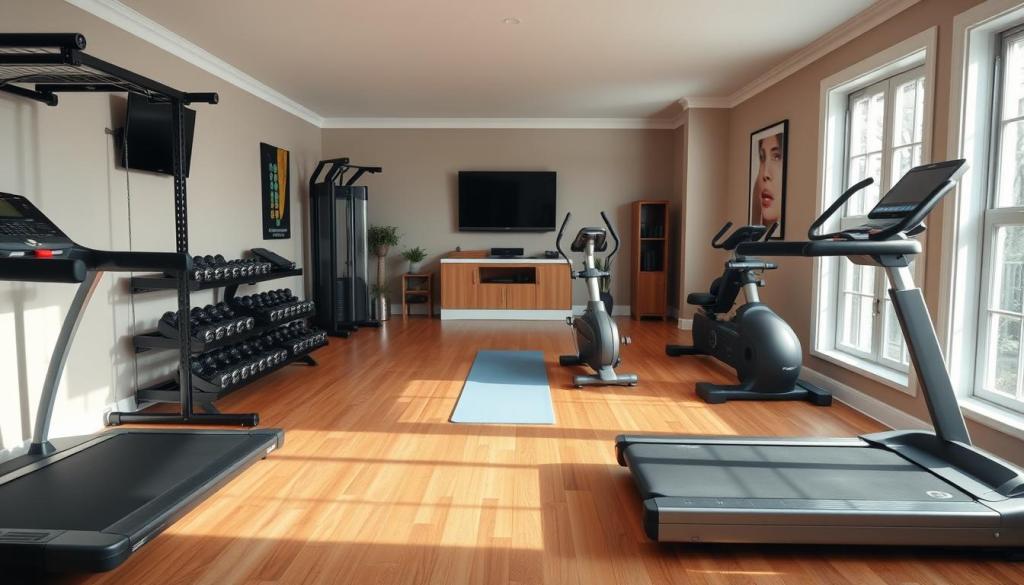
A well-lit home gym interior with a range of high-quality workout equipment neatly arranged. Hardwood floors, neutral-toned walls, and large windows creating a bright, airy atmosphere. In the foreground, a sleek treadmill, a weight rack with an assortment of dumbbells, and a sturdy exercise bench. In the middle ground, a high-tech stationary bike and a yoga mat rolled out, inviting relaxation. The background features a wall-mounted TV, allowing for virtual workout classes, and a small seating area for post-workout recovery. The overall mood is one of functionality, comfort, and a commitment to personal fitness within the home environment.
Time-Saving Benefits of At-Home Workouts
When your gym is just steps away, you save a lot of time. A 30-minute round-trip saved five times a week equals 120 hours a year. With at-home workout equipment like treadmills or rowers, you can fit in a workout anytime. No more waiting for machines or adjusting your plans around gym hours. You can train at midnight, noon, or whenever it suits you.
Long-Term Cost Savings Compared to Gym Memberships
A yearly gym membership costs about $960, which is $4,800 over five years. Compare that to setting up a basic home gym. Entry-level home gym ideas like adjustable dumbbells or a compact elliptical offer great value. Even high-end setups, like the Titan Fitness Functional Trainer, are worth it with over 1000 exercise options. The initial cost is between $300 and $3,000, but you can save over $1,000 a year.
Privacy and Convenience Factors
Working out at home means more privacy. You avoid crowded locker rooms and awkward pauses between sets. You also have better control over hygiene and don’t worry about being judged. Brands like Peloton or NordicTrack offer stylish designs that fit seamlessly into any room. This turns any space into your own private fitness area.
Assessing Your Available Space Before Purchasing Equipment
Before buying home gym setup, measure your space well. Many beginners forget the need for open areas for movement. Start by drawing your room’s dimensions and noting doorways, furniture, and paths.
- Define workout zones: Set up areas for cardio, strength training, and stretching. A yoga mat zone needs 5×5 feet, while weightlifting requires extra clearance for barbells or pull-up bars.
- Check ceiling height: Make sure there’s 8+ feet of vertical space for exercises like overhead presses or squats. Garages with low rafters may limit equipment choices.
- Test floor safety: Check if the floor can handle heavy machines. Rubber mats protect floors and prevent slipping during workout equipments use.
Use painter’s tape to mark where equipment will go. This helps see space gaps before making a purchase. Keep at least 3 feet of free space around treadmills or rowing machines.

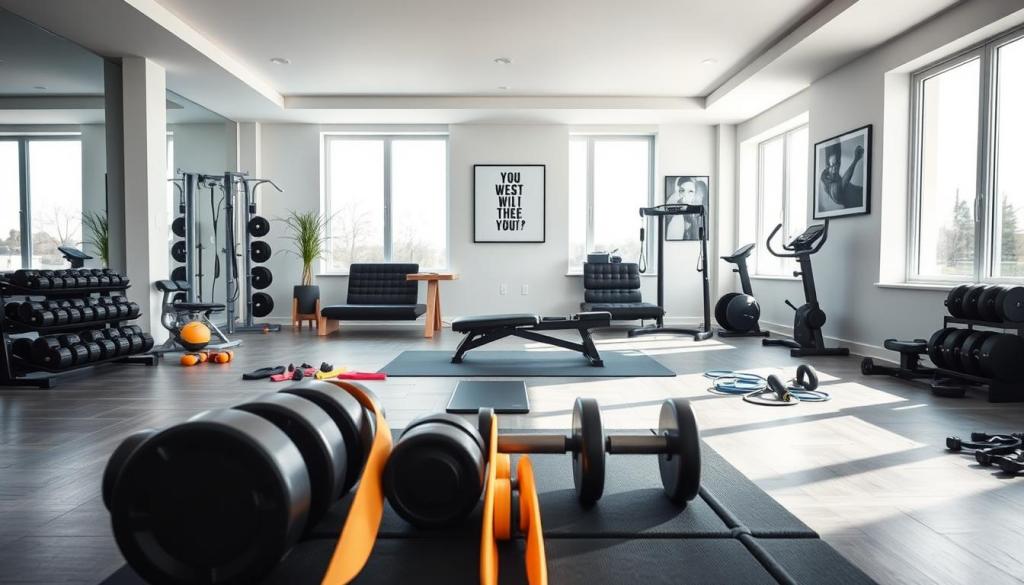
A well-lit, spacious home gym with a clean, modern aesthetic. The camera is positioned to capture the full assessment of the available space, showcasing the room’s dimensions and potential layout. In the foreground, a series of free weights, resistance bands, and other fitness equipment are neatly arranged, hinting at the diverse workout options. The middle ground features a sleek, minimalist exercise mat and a sturdy, adjustable bench. The background reveals large, floor-to-ceiling windows that flood the room with natural light, creating a bright and airy ambiance. The walls are adorned with inspirational artwork, adding a touch of personal style to the space. Overall, the image conveys a sense of organization, functionality, and a dedicated fitness environment tailored to the user’s needs.
Common mistakes include ignoring ventilation in basements or shared noise concerns in apartments. Test a jump rope or kettlebell routine in your chosen area to gauge comfort. Remember: 40% of U.S. households build home gyms in corners of garages or spare rooms—creativity works!
Start with a home gym setup focused on core workout equipments like adjustable dumbbells or resistance bands. Expand gradually using storage solutions like wall racks to maximize small spaces. Prioritize safety over aesthetics—secure unstable shelves and clear pathways first.
Essential Workout Equipments and Ideas to Create Home Gym
Starting a home gym doesn’t need a huge space. Choose gym essentials that are space-saving and effective. Look for exercise machines and tools that do more than one thing. Each piece should help you reach your fitness goals without taking up too much room.
Cardio Equipment Options for Limited Space
Compact treadmills like the NordicTrack S22i fold up for easy storage. Rowing machines, like the WaterRower Wave, can also be stylish decor. Small stationary bikes and ellipticals fit in tight spots, making cardio easy and convenient.
Strength Training Must-Haves
Get adjustable dumbbells like the Snode AD80 or Powerblock. They replace many weights. Use a REP Fitness FB-5000 bench for various exercises. Resistance bands are great for pull-ups and glute bridges, perfect for small spaces.
Versatile Equipment That Serves Multiple Purposes
A Titans T-3 power rack offers hooks, a pull-up bar, and bench space. Exercise machines like the Rogue Fitness Ohio Bar are great for lifting and mobility. Even a yoga mat can protect your floor under weight racks.
Storage Solutions for Your Fitness Gear
Wall-mounted gym essentials like cable systems save floor space. Use stackable bins for bands and foldable benches. Over-the-door organizers hold small items, and vertical shelves keep dumbbells visible but out of the way.
Budget-Friendly Home Gym Equipment for Beginners
Building a home gym doesn’t need to cost a lot. Start with at-home workout equipment that works well without spending too much. Here are some great options for beginners.
Resistance Bands and Their Versatility
Resistance bands are key for affordable fitness. Brands like WODFitters and Fit Simplify offer sets starting at $15. They can do squats, rows, and even assisted pull-ups.
Loop bands are great for yoga or mobility. Add handles for lat pulldowns or chest presses. You don’t need to spend a lot to get started.
Affordable Cardio Options
- Jump ropes: $10-$20 options like Rogue Fitness burn 10-16 calories/minute.
- Mini steppers: Body Solid models under $50 offer low-impact cardio.
- Bodyweight circuits: Push-ups, burpees, and mountain climbers cost nothing but effort.
Multipurpose Budget Equipment
Get more for your money with gear that does it all. PowerBlock Sport Pro Dumbbells adjust from 5-90 lbs. They save space and money compared to traditional dumbbells.
Exercise balls ($20) are great for benches and core work. Even medicine balls (starting at $18) add explosive power training. These are great workout gear recommendations.
Adding a $30 yoga mat and $15 foam roller covers full-body care. With these choices, a beginner can set up a gym for under $500. That’s much cheaper than a year of gym memberships!
Creating the Perfect Layout for Optimal Workouts
Creating a good home gym setup starts with planning space well. Set up different zones for cardio, strength, and recovery. Put big machines like treadmills near outlets to hide cords. Use painter’s tape to check spacing before you decide.
Make sure there’s at least 3 feet around each machine for safety. This helps avoid accidents.
- Group equipment by use: Keep dumbbells and kettlebells together. Store resistance bands and mats overhead in wall racks to free floor space.
- Optimize airflow: Position cardio machines away from walls to allow ventilation. Install exhaust fans in small rooms to reduce humidity and odors.
- Lighting matters: Combine bright overhead LEDs with dimmable task lighting. A 20% mood boost comes from adjustable lighting, studies show.
Have a central area for bodyweight exercises like burpees or yoga. Make sure the ceiling is high enough for overhead lifts—8-foot ceilings work for most barbell movements. Soundproofing with acoustic panels can reduce noise by 30%, vital in shared homes. Stronger Wellness recommends leaving 50 square feet per user to maintain comfort during dynamic movements.
For small spaces, use multi-functional items like the Ybell adjustable dumbbell system. Add mirrors along walls to double as decor and form-checking tools. Store accessories in clear bins under benches for quick access. Remember, effective home gym ideas prioritize adaptability—reconfigure zones as goals shift from strength phases to cardio focus.
High-End Exercise Machines Worth the Splurge
Investing in top-notch exercise machines and fitness gear brings a pro-level workout to your home. These high-end options are perfect for serious athletes or anyone looking for the latest tech and lasting quality. Let’s explore what makes luxury fitness stand out.
Premium Cardio Equipment
Top-of-the-line treadmills and bikes change the game for home workouts. The NordicTrack Commercial 1750 ($1,999) adjusts incline and resistance automatically. The Peloton Bike+ ($2,495) comes with a 24″ touchscreen and live cycling classes. The Hydrow Wave Rower ($1,545) offers water-like resistance with live rowing events.
These machines often come with long warranties and easy-to-use interfaces.
Advanced Strength Training Systems
A dual-axis cable machine (mentioned in data) trains multiple muscles with adjustable angles. The BowFlex SelectTech 552 adjustable dumbbells ($399) save space by replacing many sets. Add a squat rack and Olympic barbell for full-body workouts, making your space feel like a gym.
Smart Fitness Technology Integration
Smart systems like Tonal ($2,995) use AI coaching with resistance bands and a touchscreen. The Mirror offers live classes on a 55″ screen. Tempo Live uses sensors for form feedback. These systems track your progress and adjust workouts, making their high prices worth it.
Flooring and Safety Considerations for Home Gyms
Safety begins with the floor you stand on. When setting up your home gym, the floor you choose is key. It affects how well you work out and how safe you stay. Rubber flooring, like the Rubber-Cal Coin Grip Flooring Mat, gives you a non-slip surface. This keeps you stable and protects your joints.
Even if you’re on a tight budget, there are still good options. Interlocking rubber mats or foam tiles can provide the cushioning you need. They’re affordable and effective.
- Rubber Tiles: 11mm–63mm thickness options suit everything from light cardio to heavy lifts. Higher-end tiles (20–50mm) absorb impact from dropped weights or Olympic lifts.
- Foam Tiles: 20–40mm thicknesses reduce joint strain during HIIT routines or yoga. Look for interlocking designs to avoid sliding during dynamic movements.
- Carpet Solutions: Tight-loop carpets like Berber provide grip, while carpet tiles let you replace worn sections without full replacement.
- Specialty Options: Synthetic turf (13–50mm) mimics outdoor training surfaces, while luxury vinyl combines durability with style for multipurpose spaces.
Secure heavy workout equipments> like racks to walls to prevent tipping. Leave 3–5 feet of clear space around machines to avoid collisions. Ventilation matters too—open windows or fans reduce humidity and odors. Always keep a first-aid kit nearby and ensure lighting is bright enough to see foot placement during squats or step-ups.
Choose materials rated for your space’s needs. Garage gyms may need moisture-resistant options, while basement setups benefit from sound-absorbing foam. Prioritize safety first—it’s the foundation of every successful home gym.
Incorporating Technology into Your Fitness Space
Make your home gym a tech wonderland with gear that meets your fitness needs. Smart fitness gear like DRAX treadmills and Milon’s 3D avatar systems adjust workouts on the fly. These tools make your home gym ideas more tailored than ever.
- DRAX treadmills auto-adjust speed via force plate sensors.
- Milon’s tech creates custom 3D avatars for personalized settings.
- Reaxing treadmills shift directions to mimic outdoor terrain.
Watch and Learn: Stream live classes on Peloton Digital or Apple Fitness+ on a smart TV or tablet. Follow guided routines that fit your space and fitness gear. YouTube and Nike Training Club offer free or low-cost workouts for variety.
Apps Take It Further:
- Strong and Fitbod build tailored workout plans.
- Form-checking apps use phone cameras to correct movements.
- Nutrition apps like MyFitnessPal sync with fitness trackers for holistic progress.
IoT tech turns small spaces into smart setups. Pair wearable devices like Fitbit or Garmin with smart scales for data-driven goals. This tech saves money—avoiding $30–$100/month gym fees while keeping workouts fun and engaging.
Designing for Motivation: Lighting, Mirrors, and Décor
Creating a motivational home gym setup starts with details that fuel focus and energy. Strategic design choices like lighting and decor can transform a basic space into a zone that keeps you committed. Whether you’re working with 100 sq ft or a dedicated room, these tips turn aesthetics into workout allies.
Mirrors: More Than Just Reflection
Place full-length mirrors at hip and shoulder height to check form during squats or lifts. For small spaces, lean a 4×6-foot mirror against a wall to double as a visual spacer. Opt for tempered glass to avoid hazards, and aim for at least 30% of walls mirrored in strength zones. Home gym ideas like angled mirrors near treadmills let you monitor posture during cardio.
Lighting That Powers Your Routine
- Warm white LED panels (3000K) for morning workouts
- Cool daylight LEDs (5000K) for evening sessions
- Add string lights or under-shelf LED strips for mood lighting
Use dimmers to adjust intensity, and position overhead lights to avoid shadows during barbell lifts. The 70% preference for ambient morning light shows how natural tones boost mood—pair with sheer curtains for soft daylight.
Decor That Inspires Daily
Hang motivational posters at eye level or pin progress photos on corkboards. Greenery like snake plants or preserved moss walls (preferred by 65% of users) add oxygen and calmness. Opt for deep greens or earthy browns over stark white for that 50% satisfaction boost. Try these home gym ideas:
- Hang a vision board with fitness goals
- Use a Stakt Mat ($86) as a focal point
- Mount B Yoga Helix Weights on walls to free floor space
Small spaces? Lean yoga blocks against walls as makeshift shelves for quotes or keys. Every detail—from a potted plant to a motivational playlist—builds a sanctuary that feels as intentional as your workout plan.
Maintaining and Upgrading Your Equipment Over Time
Keeping your home gym in top shape is key. Start by cleaning gym essentials like dumbbells and treadmills after each workout. Store workout gear recommendations like yoga mats or resistance bands in dry spots to avoid mildew.
Treadmill belts need a monthly oiling, and rubber floors should be swept daily to keep them clean.
Check cable systems on machines like cable racks every six months. Replace worn-out grips and tighten loose bolts. A $20 foam roller might need to be replaced yearly if it cracks. High-end items like the Theragun should be cleaned with microfiber cloths.
- Lubricate moving parts with silicone spray
- Store weight plates in breathable mesh bags
- Cover unused equipment with dust covers
When it’s time to upgrade, choose gear that grows with you. Adjustable dumbbells, like the Bowflex SelectTech, save you money by letting you skip buying multiple weights. If you can, invest in a used power rack after a year of regular workouts. Most users suggest starting with this essential piece of equipment.
Consider selling old gear on Facebook Marketplace to fund new purchases. Many people save up to 70% by buying used.
Every 18 months, check if your tools still challenge you. Replace jump ropes when the cables start to fray. Think about getting a Peloton bike only after you’ve mastered the basics. Choose storage systems that grow with your collection to keep your space organized.
Home Gym Ideas for Specific Fitness Goals
Creating a home gym that fits your goals boosts your motivation and results. Start with workout gear that matches your specific needs, not just generic setups.
Equipment for Bodybuilding and Muscle Gain
Begin with adjustable dumbbells like the Bowflex SelectTech 552 ($329) for efficient muscle growth. Add a cable crossover machine for isolation exercises. A power rack, like the Rogue R-3 Power Rack (4.9 stars), is essential for safe heavy lifting.
Use bands and chains for progressive overload. This approach helps 70% of users achieve better consistency with their workouts.
Creating a Cardio-Focused Home Gym
Combine HIIT and endurance with a rowing machine or treadmill. Jump ropes, battle ropes, and step platforms make the most of your space. A 400-pound capacity squat stand (e.g., Rogue S-1) is great for cardio exercises like sled pushes.
Over 60% of trainers find this mix helps balance strength and cardio gains.
Equipment for Mobility and Recovery
- Invest in foam rollers and massage guns for post-workout recovery
- Add yoga mats and resistance bands for dynamic stretching
- Consider portable saunas or contrast baths for muscle recovery
These tools help 80% of users who say home gyms make fitness a part of their daily routine more effectively.
Multi-Purpose Setups for Varied Routines
Choose modular gear like adjustable benches and collapsible racks. The Fitness Reality 810XLT power cage saves space while handling 1,000+ lbs. Pair storage racks with vertical holders to maximize room.
Over 95% of lifters use collars to secure plates safely in these setups.
Conclusion: Building Your Perfect Home Gym Journey
Creating a home gym doesn’t need a big budget or a lot of space. Start with the basics like resistance bands or DMoose’s adjustable dumbbells. Even with just $1,000, you can set up a functional gym, using space-saving items like foldable treadmills.
Remember, 85% of home gym owners say they work out more often. This shows that the right gear and layout help keep you on track.
Choose versatile equipment. DMoose resistance bands offer 25 lbs of resistance and are easy to carry. Their doorway pull-up bars add strength training without taking up much space. Use slatwall panels for storing your gear to keep things organized and safe.
Every home gym starts small. Begin with the essentials and add more as you reach new fitness goals. Even a small space can be transformed with smart choices, saving you money and time compared to gym memberships.
Don’t wait to start. Begin with affordable items like jump ropes or ab rollers. Then, upgrade as you get more serious. DMoose’s 3-in-1 dumbbell set or compact cardio tools show you can work out effectively without a big gym.
Use smart tech or mirrors to track your progress and improve your form. Natural light can also boost your energy during workouts. The most important thing is to stay consistent, as every workout is important.
Whether you want to build muscle or improve your cardio, your home gym can be tailored to your needs. Saving money on gym fees adds up fast. Invest in gear that fits your goals, and watch your motivation grow. Your fitness journey begins now—get those resistance bands or adjust your dumbbells, and turn any room into a place of progress.




 Site başlığı